Titanium Web ProxyA high performing HTTP(S) proxy server.
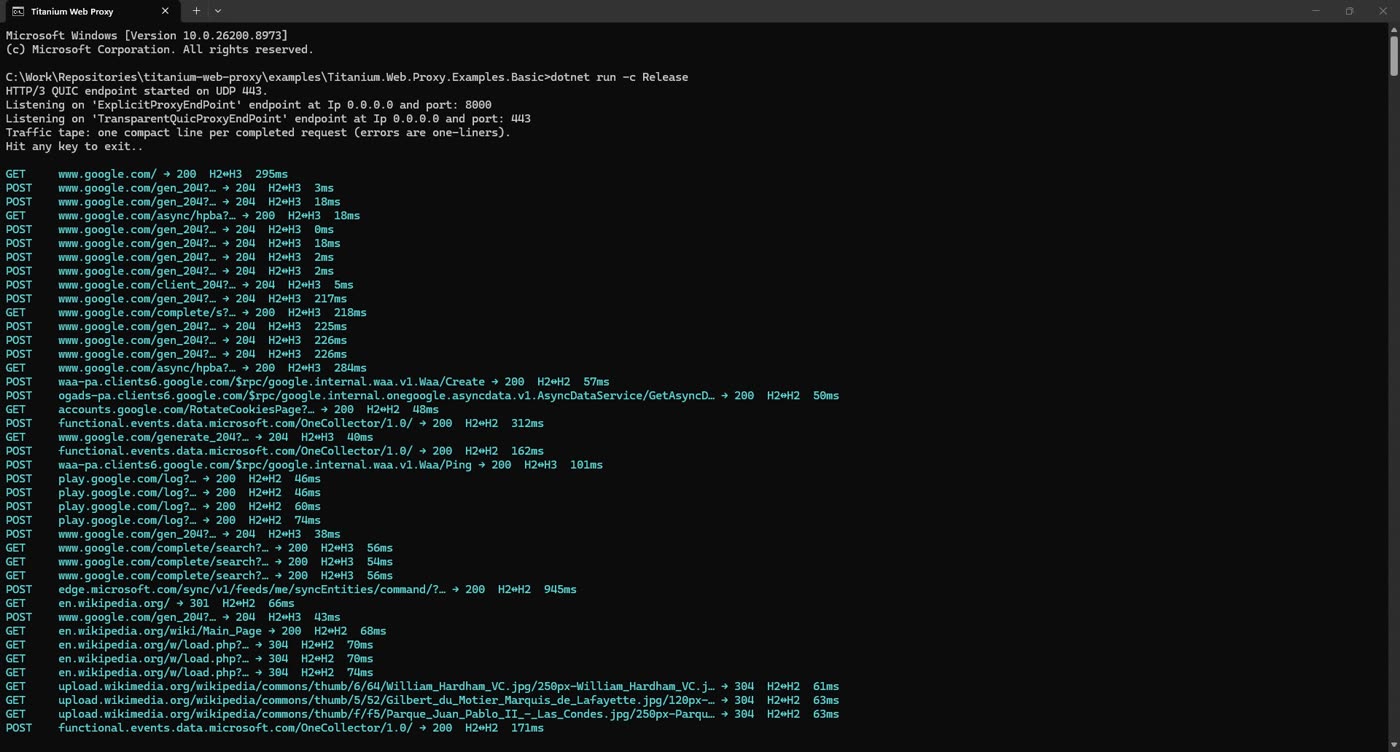
Embeddable .NET HTTP(S) and man-in-the-middle (MITM) proxy library, standalone CLI and Kubernetes reverse proxy, and desktop MITM inspector — on Windows, Linux, and macOS.
using System.Net;
using Titanium.Web.Proxy;
using Titanium.Web.Proxy.Models;

using var proxyServer = new ProxyServer();
proxyServer.BeforeRequest += async (s, e) =>
{
    Console.WriteLine(e.HttpClient.Request.Url);
};

var endPoint = new ExplicitProxyEndPoint(
    IPAddress.Loopback, 8000, decryptSsl: true);
proxyServer.AddEndPoint(endPoint);
// The first run installs a root certificate in the current user's trust store.
proxyServer.CertificateManager.EnsureRootCertificate(
    userTrustRootCertificate: true,
    machineTrustRootCertificate: false);
proxyServer.Start();
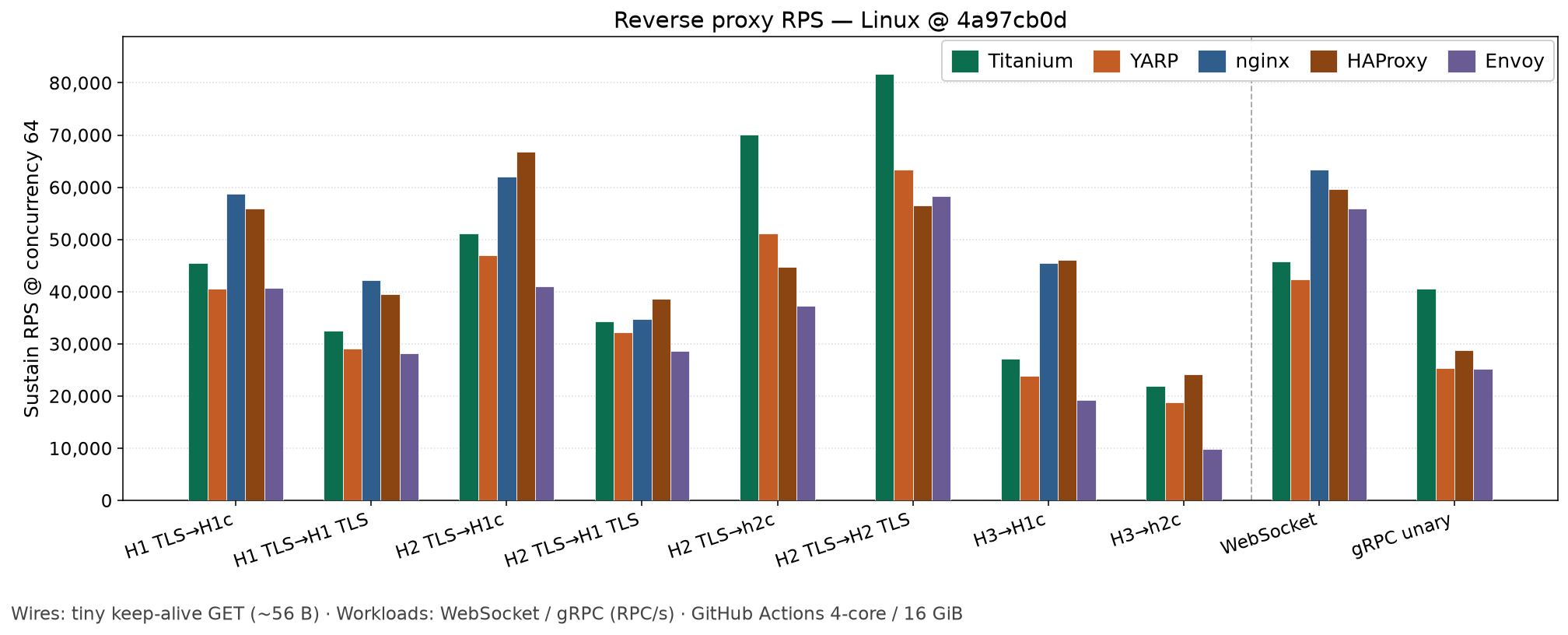
The first run installs a root certificate for the current user. Trust. 45,499 requests/second on Linux for a tiny TLS GET. Chart.
# conf/twp.yaml — listener is 0.0.0.0:8080 so the published port reaches it
schemaVersion: "7.1"
listeners:
  - host: "0.0.0.0"
    port: 8080
    decryptSsl: false
    forwardHost: "127.0.0.1"
    forwardPort: 8080
45,499 requests per second: a tiny keep-alive GET (~56 B), HTTP/1 with TLS in and plain HTTP/1 out, on Linux (GitHub-hosted runner, 4 vCPU / 16 GiB, median of 3, sustain at concurrency 64). Same harness versus peer proxies. The Linux tiny-GET chart is below. Charts for the other operating systems, and the named comparison, are on the performance page and the Performance wiki.
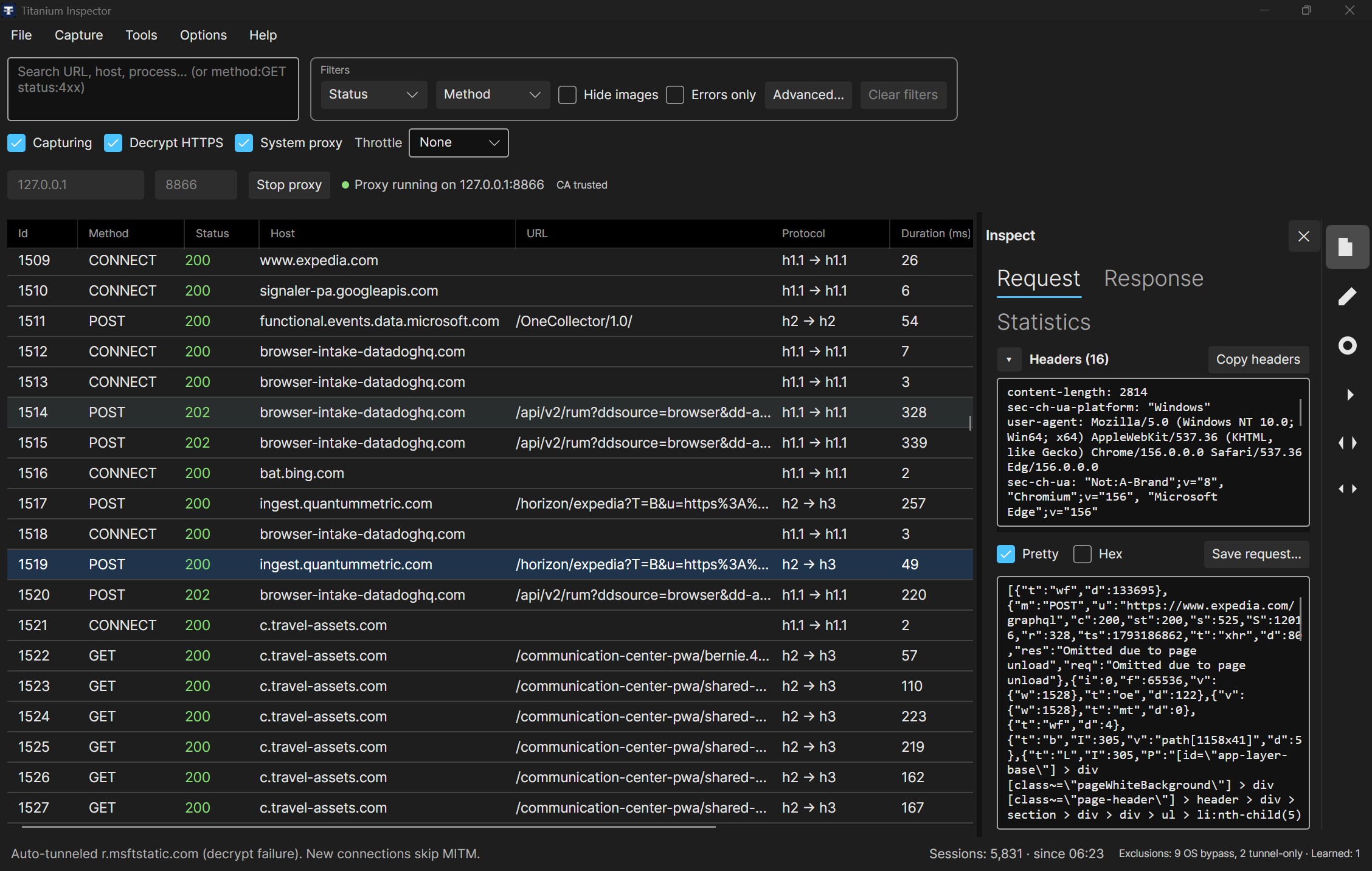
Native desktop Inspector on Windows, macOS, and Linux — decrypt HTTPS, turn on system proxy, and inspect sessions, headers, and bodies. Only on machines you control.
HTTP/2 is on by default. HTTP/3 is on when QUIC is available. Bridge when client and backend differ. Inspect WebSocket, gRPC, SSE, and GraphQL in the same grid.
Change routes and backends with `titanium reload` while current connections stay up. SIGHUP does the same on Linux and macOS, and `--watch` follows Kubernetes ConfigMap updates.
Round-robin, random, least requests, and least time. Health checks eject a failing backend, retries move a request to another one within a budget, and a cookie or header can pin a client to one.
Set a TLS floor, get ACME certificates, rate-limit by client or header, ask an external service to authorize each request, and add OpenID Connect login and WAF screening with Plus.
A shared response cache that skips `Set-Cookie` and private responses (Plus), gzip and brotli response compression, and caps on request bodies, headers, and decompression ratio.
Titanium.Web.Proxy, Titanium.Cli, Manager, Gateway, docs, and the website are MIT-licensed for commercial and non-commercial use.
Inspector & Plus (noncommercial)
PolyForm Noncommercial
Titanium Inspector, Titanium.Plus, and the xDS / GeoIP satellites are for non-commercial use only (PolyForm Noncommercial 1.0.0). Full terms: Editions & licenses.